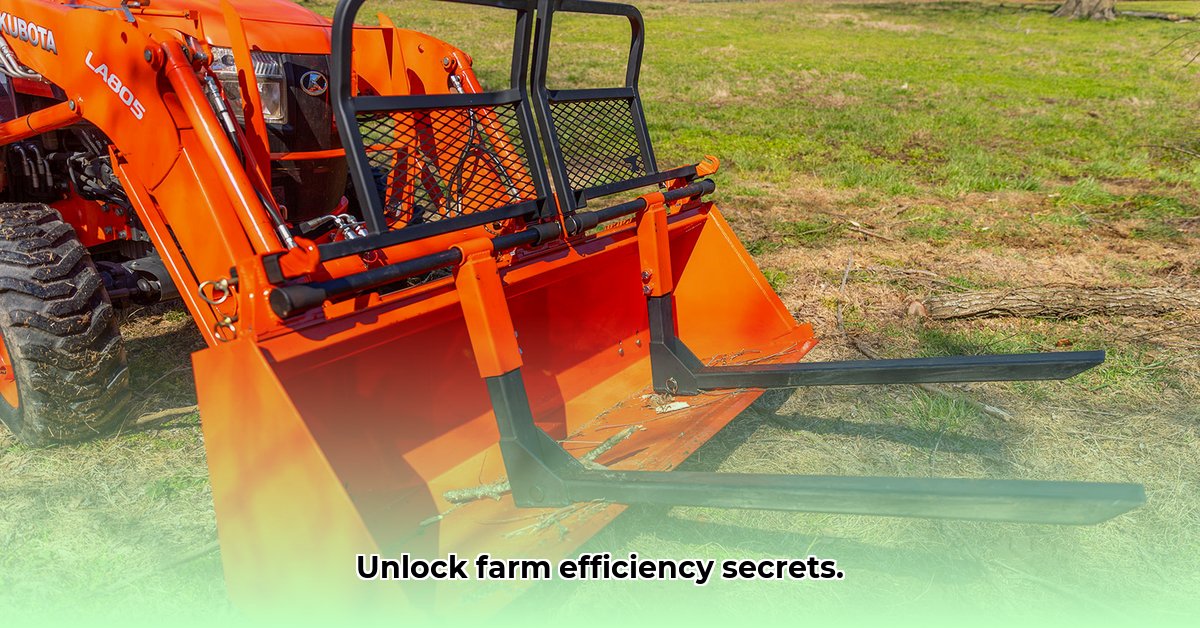
Farming demands efficiency and sustainability. Kubota pallet forks are designed to meet these challenges, offering a blend of power, precision, and eco-friendliness. This guide will equip you with the knowledge to select, operate, and maintain these valuable tools, maximizing your farm's potential while minimizing your environmental impact. For troubleshooting common Kubota tractor issues, see this helpful resource: Kubota Tractor Troubleshooting.
Choosing the Right Kubota Pallet Fork
Selecting the ideal pallet fork hinges on your specific needs and your Kubota tractor's capabilities. Consider these factors:
Tractor Size and Lifting Capacity: Your Kubota's model determines its maximum lifting capacity. Never exceed this limit; doing so risks damage to your tractor and serious injury. Consult your owner's manual for precise specifications.
Typical Loads: What will you be moving? Hay bales, feed pallets, or heavier materials like construction supplies require different lifting capacities and fork lengths.
Landpride Compatibility: LandPride offers a range of forks compatible with many Kubota tractors. 1 Research their models to find the best fit for your needs. Always confirm compatibility with your specific Kubota model.
Fork Length and Tine Spacing: Longer forks offer greater leverage but may require more space for maneuverability. Shorter forks are ideal for confined areas but reduce the load capacity. Choose the length appropriate for your work environment.
Example: A LandPride PFL12 series fork (specifications must be verified with the manufacturer) might be suitable for smaller Kubota BX or B series tractors and lighter loads. A larger model like the PFL18 (specifications must be verified with the manufacturer) may be necessary for heavier loads and larger L series tractors. Always check the manufacturer's specifications to determine appropriate weight capacity and compatibility.
Safe Operation and Maintenance
Safe operation is paramount. Always consult your Kubota tractor and fork owner's manuals for detailed instructions.
Step-by-Step Guide:
Attachment: Securely attach the forks to your Kubota's quick-attach system. Double-check all connections are locked and engaged. (Failure to properly secure the forks could lead to accidents.)
Lifting: Never exceed the weight limits specified in your manuals. Begin with a test load to assess stability. (Overloading can result in equipment damage or serious injury.)
Transport: Keep the load low and centered. Avoid sudden movements or excessive speeds. (Jerky movements cause instability and increase the risk of accidents and fuel waste.)
Maintenance: Regularly inspect for wear and tear—bends, cracks, loose bolts, or damage to the pins and pivot points. Lubricate moving parts per the manufacturer's recommendations. (Preventive maintenance extends the lifespan of your forks and prevents costly repairs.)
Troubleshooting: Consult your owner's manual for solutions before seeking professional help. Only qualified personnel should perform complex repairs. (Improper repairs can create additional hazards.)
Integrating Pallet Forks into Sustainable Farming Practices
Kubota pallet forks contribute to sustainable farming in several key ways:
Fuel Efficiency: Precise movements and reduced travel minimize fuel consumption, saving money and reducing your carbon footprint. Aren’t you curious how much fuel you might save each year? With optimized techniques, the savings can be substantial.
Time Savings: Efficient material handling frees up time for other tasks. This is particularly critical during peak seasons. In fact, many farmers report a significant reduction in labor hours.
Reduced Labor: The reduced need for manual material handling minimizes labor costs and the risk of worker injury. (Ergonomic improvements significantly reduce the risk of musculoskeletal disorders.)
Improved Soil Health: Fewer passes across fields reduce soil compaction, leading to better drainage, healthier soil, and potentially higher crop yields. (Reduced compaction improves soil aeration and water infiltration.)
Case Studies/Examples
(This section requires further research to add real-world examples of farmers successfully using Kubota pallet forks and quantifying their gains in efficiency and sustainability.)
Conclusion
Kubota pallet forks represent a significant investment in efficiency and sustainability for modern farms. By implementing these guidelines, you can maximize your returns, minimize your environmental impact, and enhance the safety of your operations. Choosing the right equipment and using it safely and properly is a crucial aspect of modern agriculture.